Search Japanese Food Recipes

Showing posts with label vegetable. Show all posts

Saturday, June 27, 2015

Easy Bean Sprout (moyashi) Omlete Recipe


Japanese bean sprouts (moyashi) are an extremely inexpensive and nutritious vegetable used in many Japanese recipes. Here's a simple omlete you can make.
Ingredients: 


  • 1-2 slices of sandwich ham
  • 2 eggs
  • 1/2 onion
  • handful of bean sprouts
  • milk
  • salt
  • soy sauce
Directions:


  1. Dice the onion and ham. 
  2. Saute onion and ham in a pan on medium heat with a little cooking oil. Add salt
  3. When onion is tender add the bean sprouts with about 1/4 cup water. and steam.
  4. In a separate bowl, beat the eggs, add a little milk and a dash of soy sauce.
  5. Add mixture to the pan cook everything into an omlete, turning occasionally until done.
  6. Serve with rice and ketchup if desired.

Saturday, January 10, 2015

Simmered Hakusai (Chinese cabbage) and egg Recipe


Here's an easy way to enjoy Chinese cabbage with egg as a side dish. It's hot and great in winter.

Ingredients:
  • about 5 large Chinese cabbage leaves
  • 1 leek(long green onion)
  • 3 eggs


Broth:
  • 1 cup of water
  • 5 grams hondashi
  • 5 Tblsp. soy sauce
  • 1 Tblsp. mirin(cooking sake)
  • 2 tsp. salt


Directions:

  1. Wash and cut the Chinese cabbage leaves in half lengthwise and again into short lengths. Cut the green onion into short lengths.
  2. Add the water and seasonings to a pot and bring to a boil.
  3. Add the vegetables and simmer until cooked.
  4. Beat three eggs with a pinch of salt and add the mixture to the pot and mix gently.
  5. Cook another minute or two.


Daikon(Japanese White Radish) and Carrot Tuna Salad


Daikon, Japanese white radish is often used in soups or hot pot dishes, stewed in a broth for a long time, but here's a simple recipe to enjoy this winter vegetable raw in a salad. The daikon and carrot are usually cut into thin slices with a knife, but to save time, I just used a peeler. It just takes  few minutes to make and tastes delicious.

Ingredients:

  • about 3 inch length or 1/4 large daikon(Japanese white radish)
  • 1 carrot
  • 1 can of tuna
  • salt 
  • mayonnaise
  • ground  or whole white sesame (optional)


Directions:

  1. Peel the daikon and carrot into thin slices with a peeler. Discard the outside skin. Daikon tends to be a wet vegetable, so squeeze out any excess water.
  2. In a bowl, combine daikon, carrot, tuna, a couple pinches of salt, and enough mayonnaise so everything is well covered. 
  3. Mix well and serve with white sesame on top.


Hakusai and Pork Nabe(Chinese Cabbage Hot Pot Dish) Recipe


In Japan in winter, the quintessential Japanese meal is nabe. Nabe is a hot pot dish traditionally cooked in an earthenware pot. It is often done at parties and cooked on a gas burner at the table. Various vegetable and meat ingredients are cooked in a broth. Guests take what they like and eat and more ingredients are added. There are infinite variations and recipes. Nothing warms a body better on a cold winter's day that a steaming bowl of nabe. This is a really simple and delicious recipe using Chinese cabbage and pork. Serves 1-2 people.

Ingredients:


  • 5-6 large leaves Chinese cabbage
  • 300 grams thinly sliced pork
  • 1 half large onion
  • 1 cup of water
  • 5 grams or so of granulated fish stock-hondashi
  • 1 Tblsp. salt
  • 6 Tblsp. soy sauce
  • 1 Tblsp. mirin(cooking sake)


Directions:

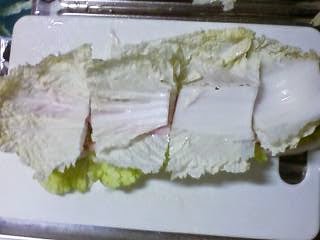
1. Wash and cut the Chinese cabbage leaves in half lengthwise.


2. Stack alternating layers of Chinese cabbage and sliced pork. Change the direction of the cabbage leaves each time. Stack until about 5 leaves thick.


3. Cut the stack into 5 cm/ about 2 inch lengths. 
4. Fill the nabe pot with the cut leaves standing up. Repeat with all the leaves and pork. Make a spiral pattern in the pot until no more fits. 
5. Cut half an onion into small pieces and stick into any empty spaces. 
6. Add the water, fish stock, and salt, cover and bring to a boil.


7. Once boils, reduce heat and add soy sauce generously. Replace lid and simmer until cooked. 

The pork and Chinese cabbage cooked in the broth makes a great combination. So tasty and hot!


Wednesday, December 31, 2014

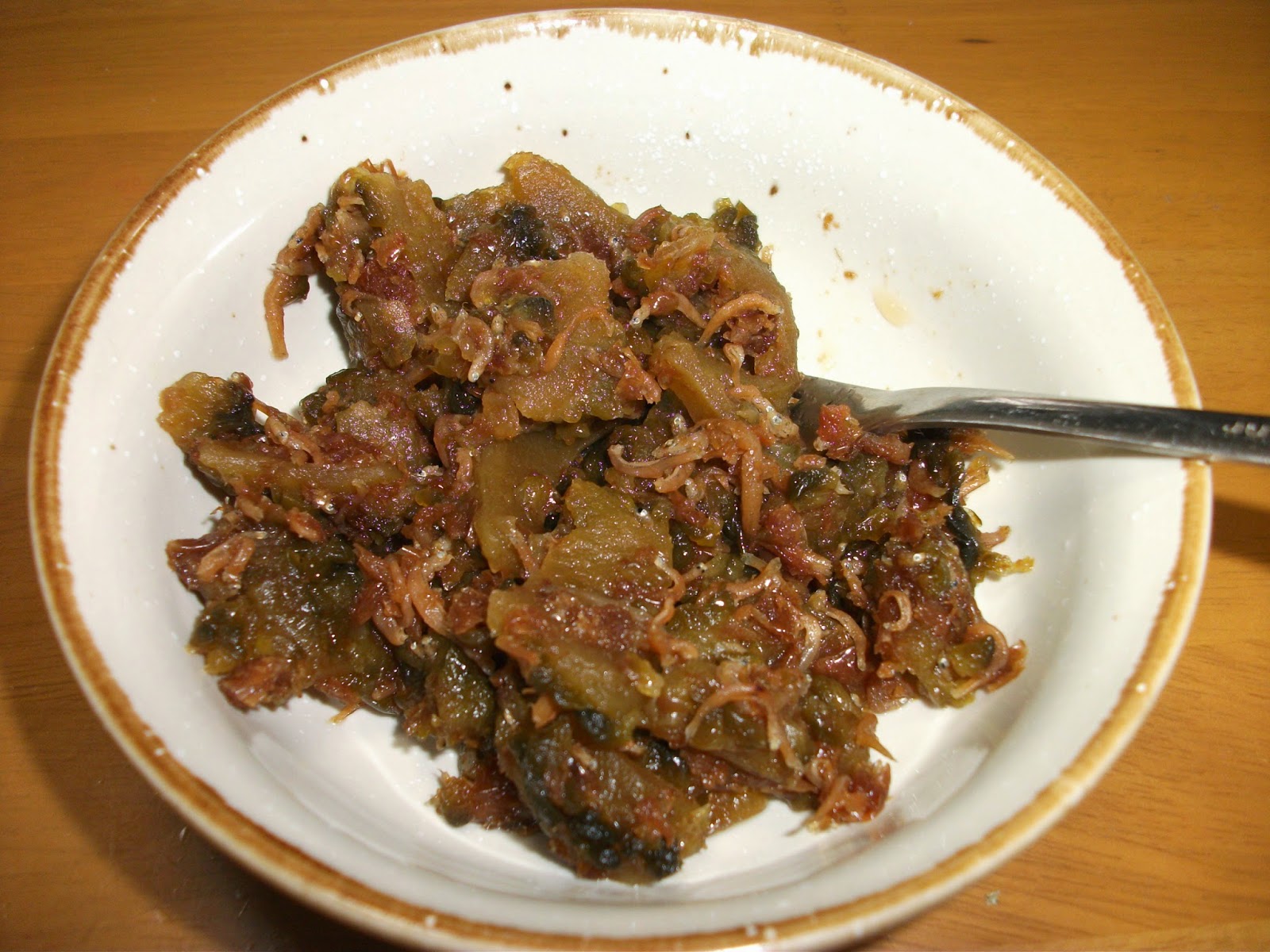
Goya Tsukudani(Salty-Sweet Bitter Melon)


Goya(bitter melon) is infamous in Japanese cuisine for its health benefits. It is widely grown and used in the tropical island of Okinawa. Although very healthy, it's quite bitter. However, one very palatable way to eat it is Goya Tsukudani. It's quite sweet with a hint of bitterness. This is a great side dish with rice. The Chimen jakko(small dried anchovies are a good source of calcium and widely used in Japanese cooking.


Ingredients:


  • Goya(bitter melon).....300 grams
  • soy sauce....50 ml
  • sugar....100 grams
  • katsuo-bushi(bonito flakes...10 grams
  • vinegar...30 ml
  • Chirimen Jakko(small dried anchovies)....10 grams
  • roasted white sesame...2 tsp.


Directions:


  1. Cut and wash the goya. Scrape out the seeds.
  2. Cut into thin slices and lanch in boiling water.
  3. Remove from water and squeeze out excess water.
  4. Combine soy sauce, sugar, and vinegar and bring to boil.
  5. Add goya and simmer over medium heat.
  6. Add bonito flakes and anchovies and simmer out the liquid.
  7. Sevre with sprinkled sesame seeds.


After cooling, the mixture can be frozen. Thaw and serve with rice anytime.


Sunday, December 28, 2014

Chikuzenni 筑前煮 (Sauted Chicken with Root Vegetables)


There is chikuzenni 筑前煮, a stew with chicken, renkon(lotus root), carrots, mushrooms, and takenoko(bamboo shoots). Chikuzenni is especially popular in late fall or winter. The steaming root vegetables and meat and savory broth keep a body warm in the cold winter months.

Time, about 45 minutes

Ingredients:


  • chicken thigh or other white cut ..................300 grams/10 oz.
  • dried shittake mushrooms ................................8
  • gobo(burdock root).................................................100g/half a stick
  • carrot.............................................................................1
  • rennkon(lotus root).................................................100g/ about 1
  • mirin(cooking sake....................................................5 Tblsp.
  • Soy sauce.....................................................................5 Tblsp.
  • dashi stock...................................................................200ml
  • cooking oil


Directions:


  1. Cut chicken into small chunks, season with salt and mirin.
  2. Cut vegetables into bite sized wedges. Cut burdock root at an angle. Soak burdock and lotus root in vinegared water.
  3. Put 1 Tblsp. cooking oil in a pan and saute the chicken. Add the vegetables and cook everything together.
  4. Add the dashi stock and mirin and soy sauce. Bring everything to a boil, then reduce to low heat and simmer until everything is tender.
  5. Seve with steamed snow peas if desired.


Saturday, December 6, 2014

Simple Pumpkin Croquette Recipe


Dinner tonight was Hiyasi Chuka, egg noodles served cold with sliced tomato, cucumber and ham and with a white sesame sauce. It's tangy and has a great sesame taste. It's a favorite dish in the summer. Also Junko made croquette with leftover pumpkin and potato salad. It tasted great served with a little okonomiyaki sauce(like Worcester sauce).


Pumpkin Croquette

Ingredients:


  • about 1/2 Japanese pumpkin
  • mayonnaise
  • salt
  • flour
  • egg
  • breadcrumbs
  • cooking oil


Directions:

Pumpkin Salad


  1. Japanese pumpkins are green very hard. You can peel if you like, but the peel is quite good in pumpkin salad. Wash and cut about half the pumpkin into small chunks and boil in a pan for about 10-15 minutes.
  2. Drain pumpkin and mash pumpkin.
  3. Add some mayonnaise and a pinch of salt and mix well.
  4. Serve pumpkin salad or use for croquettes
  5. Shape pumpkin salad into little rolls or patties.
  6. Dip patties first in flour, then beaten egg, an finally breadcrumbs.
  7. Fry in oil at 350°F(180ºC)until golden brown. Drip off or towel off excess oil.
  8. Serve with tonkatsu , okonomiyaki, or Worcester sauce, shredded cabbage and rice.


Monday, September 23, 2013

Japanese Daikon Radish Salad Recipe


Unlike it's small, red and spicy counterpart in the west, the Japanese white radish or daikon(大根) is very large and mild and is used in many Japanese dishes, especially miso soup or Oden. Not only the flesh, but the leaves can be eaten raw and make a very healthy salad. Here's a daikon and bacon salad recipe that has just the right balance. Perfect for dieters. If you're in a rush, just substitute bacon bits for a no cooking recipe.


Serves 4     172 cal./serving

Ingredients:

  • 6-7 inch(15-18cm) piece of daikon(Japanese white radish)
  • 4 slices of bacon
  • vegetable oil
  • 1/2 tsp. salt
  • 1 Tbsp. rice vinegar
  • ground black pepper
  • 1 Tbsp. lemon juice
  • daikon leaves to taste, finely chopped
  • Japanese sansho pepper or red pepper(optional)

Directions:

  1. Peel daikon and julienne into thin matchsticks about 2 inches long. Place in a large bowl of cold water for about 5 minutes to crisp. Drain well in a colander.
  2. Cut bacon into 1/4 inch(5mm) wide strips. Heat 1/2 tsp. of oil in a pan and fry bacon on low heat until crispy. Drain on paper towels.
  3. In a salad bowl, combine salt, vinegar, lemon juice, and 1Tbsp. of oil in that order and mix well.
  4. Add daikon strips, daikon leaves to taste, and bacon, then toss salad.
  5. Serve with a sprinkling of ground pepper, Japanese sansho pepper, or red pepper, if desired.


Variation:

  • For a very quick, easy version, substitute bacon bits for bacon.

Saturday, September 21, 2013

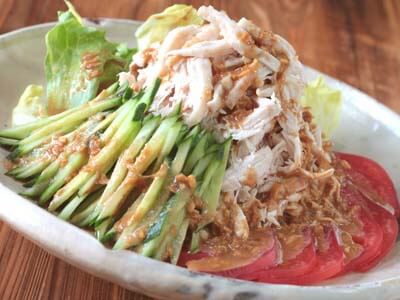
Japanese Chicken Sesame Salad Recipe (Banbanji)


Banbanji (バンバンジー) is a cold chicken dish with fresh vegetables and a sesame dressing. It's especially enjoyed in the summer. If you can find sesame dressing at your Asian grocer, you can use that. If not, this banbanji recipe shows you how to make your own from scratch. Enjoy this light and healthy dish.


Serves 2-4    243 cal./serving

Ingredients:
  • 2 chicken breasts (9 oz./250g)
  • a pinch of salt
  • 1 pack (9 oz./250g) bean sprouts
  • 2 cucumbers
  • 3/4 cup roasted sesame seeds
  • 12 cherry tomatoes, halved or 3 tomatoes, sliced
  • 3 Tbsp. soy sauce
  • 3 Tbsp. mirin( or 3 Tbsp. sake + 1 Tbsp. sugar)
  • 3 Tbsp. rice vinegar
Directions:
  1. Place chicken in a small pan of lightly salted water and boil about 10 minutes. Allow to cool in the water. Remove chicken and save the stock. When cool, tear chicken into long thin strips by hand.
  2. In a separate pan, blanch bean sprouts, then immediately rinse in cold water.
  3. Cut cucumber long, thin matchstick like strips.
  4. Make sauce by grinding sesame seeds in a grinding bowl, mortar, or food processor. Add soy sauce, mirin, and vinegar,. Then mix in some of the chicken stock, little by little, stirring until mixture is smooth.
  5. Arrange cut tomatoes, bean sprouts, cucumbers, and chicken on a plate. Pour on sesame sauce and serve.

Friday, September 20, 2013

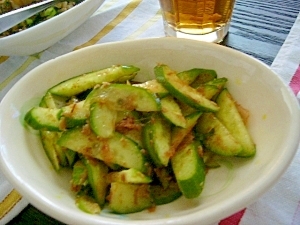
5 minute Japanese Cucumber Pickles Recipe('Kyuri no shoyu-zuke)


Here is a super easy 5 minute Japanese cucumber pickles recipe. It's actually more like a mini salad than pickles. Great for summer or anytime. A healthy last minute side dish.


Serves 4      20 cal./serving

Ingredients:

  • 1-2 cucumbers
  • 1 tsp. white sesame seeds
  • 2 Tbsp. soy sauce
  • 5 rounded Tbsp. loose bonito flakes(hana-katsuo/katsuo-bushi)
  • 1 tsp. sesame oil(optional)

Directions:

  1. Toast sesame seeds. Partially peel and seeds cucumber, then quarter lengthwise. Cut into bite size wedges. Pat with a dry cloth to remove excess water.
  2. Combine cucumber, soy sauce, sesame seeds, and bonito flakes in a bowl. Add a little sesame oil for extra taste. Mix well.
  3. Cover and refrigerate for 20 minutes before serving.

Thursday, September 19, 2013

Japanese Green Pea Rice Recipe(Aomame Gohan)


Take something as ordinary as green peas and white rice and combine them to create an exciting new dish, Aomame Gohan(青豆御飯). Frozen peas would work equally well. This rice dish is usually served in the spring and represents the coming of the season. Eat this with your favorite meat or fish entree.


Serves 4       484 cal./serving

Ingredients:

  • 1-1/2 cups tender green peas
  • 2-1/2 cups short grain rice
  • 6 inch(15 cm) piece kelp(konbu)
  • 2 Tbsp. sake
  • 2 tsp. salt

Directions:

  1. Wash rice several times with cold water, pouring off until water is almost clear. Add 1.1 cups of water per cup of rice. Soak for 30 minutes-1 hour.
  2. Do not wash kelp, as the white powder contains much of the flavor. Instead, wipe both sides of kelp with a damp cloth and cut 1/2 inch(1-1/2cm) slits at 1 inch(2-1/2cm) intervals. 
  3. In a medium saucepan, combine rice, cooking water, and remaining ingredients. Cover and bring to a boil over high heat. Remove kelp, replace lid and continue boiling and reduce heat. Cook for about 13 minutes. Turn heat to high for 5 seconds and remove from heat. Let rice stand covered for 10-15 minutes.
  4. Remove lid and lightly fluff rice with a wooden spoon or Japanese rice paddle(shamoji)

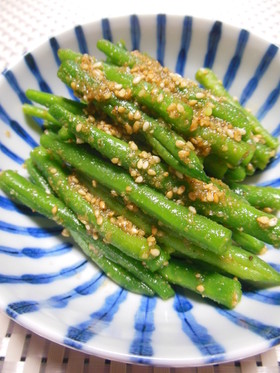
Japanese Green Beans with Sesame Recipe(Ingen no Goma-ae)


In America, I only knew sesame as something on hamburger buns, but Japanese cooking opens up a whole new world with sesame. Sesame sauces and dressings give food a wonderful flavor and aroma. It turns normal green beans into a new exciting side dish, Ingen no goma-ae(いんげんのごまあえ). You can probably find ground sesame at your local Asian grocer, if not, you can make it yourself with this simple recipe. This is a great dish for dieters and vegetarians.


Serves 4     85 cal./serving


Ingredients:

  • 1/2 lb(225g) fresh green beans
  • mirin

Sesame dressing:

  • 4 Tbsp. white sesame seeds
  • 1-1/2 Tbsp. dashi bonito stock
  • 1 Tbsp. sugar
  • 1 Tbsp. soy sauce

Directions:

  1. Sesame Dressing:Toast and grind sesame seeds. Mix other ingredients with sesame paste.
  2. Wash and trim green beans. Cut in half diagonally. Cook in water with some salt until beans are tender and crisp. Drain and sprinkle with a little mirin.
  3. Mix green beans and sesame dressing thoroughly and serve.


Japanese Pumpkin and Ground Meat Recipe(Kabocha to hiki-niku no Nimono)


Here's a really simple and tasty pumpkin and ground meat recipe. Kabocha to hiki-niku no Nimono(かぼちゃとひき肉の煮物) is a common and healthy side dish at Japanese tables, especially in fall. Japanese pumpkins or squash are small, green, and quite hard. They're really challenging to make a Jack-O-Lantern out of, let me tell you. But they're also delicious. The flesh is yellow or orange. Leave some of the peel on if it's not too hard. This recipe can be used with ground beef, pork, or chicken, whichever you choose. You can also add finely chopped green onion to the meat if you like. The result is a sweet and savory dish. The leftover sauce is great over rice and eat with a spoon.

Serves 5-6       301 cal./serving

Ingredients:

  • 2 lb(1kg) Japanese pumpkin/winter squash(kabocha)
  • 1/2 lb (225g) ground beef, chicken, or pork
  • 5 Tbsp. sugar
  • 2 tsp. salt
  • 2 tsp. soy sauce
  • 2 tsp. vegetable oil

Directions:

  1. Cut open pumpkin and clean out the middle seeds and fibers and discard. Cut pumpkin into large, bite sized chunks. It's ok to leave some peel.
  2. Lightly brown the ground meat in a saucepan with a pinch of salt and just a little oil over medium heat.
  3. Add pumpkin and gently mix with ground meat. Then add 1-1/4 cups water, salt, soy sauce, and sugar.
  4. Bring to a boil, reduce heat and simmer with lid for about 10 minutes until pumpkin is soft.

Wednesday, September 18, 2013

Japanese Shabu-Shabu Recipe


At the heart of Japanese cooking is using fresh, high quality ingredients that are lightly cooked for a natural taste. This is no where more highly refined than in the art of Shabu Shabu. This is one of many hot pot dishes like Suki-yaki that is cooked in a at the table and diners take what they like and dip into a sauce and eat. The name, shabu-shabu comes from the sound of the cooking ,meat. Very thin slices of beef are used and dipped for only a few seconds in the boiling broth. There are other variations of shabu-shabu using pork or crab. There are 2 dipping sauces used; a lemon sauce and a sesame sauce. These sauces are probably available at your local Asian grocer, if so you can use them, or this recipe shows how to make them from scratch. This is a great party dish for a few friends, especially in winter. Enjoy.

Serves 4        1047 cal./serving

Ingredients:

  • 1-1/4 lb.(570 g) well marbled sirloin, sliced paper thin
  • 2 quarts(2 liters) dashi bonito stock
  • 4 leaves of Chinese cabbage(hakusai)
  • 12-16 fresh spinach leaves with stems
  • 3 leeks
  • 1 block regular tofu, about 10 oz.(285g)
  • 8 fresh shitake mushrooms
  • 4 servings udon noodles(optional)
  • 1 small, dried red pepper or 1/4 tsp. cayenne pepper
  • 3/4 cup finely grated daikon(Japanese white radish) or turnip
  • 4-5 finely chopped green onions

Lemon-Soy Dipping Sauce(ponzu)

  • 2 inches(5 cm) piece kelp(konbu)
  • 5 Tbsp. soy sauce
  • 2 Tbsp. rice vinegar
  • 1 Tbsp. lemon juice

Sesame Dipping Sauce(gomadare)

  • 1/2 cup bonito stock
  • 6 Tbsp. white sesame seeds
  • 2 Tbsp. white miso
  • 2 Tbsp. mirin
  • 2 tsp. rice vinegar
  • 1 clove of garlic
  • 1 pinch of red pepper
  • 2 tsp. vegetable oil

Preparation:

  • Prepare in total, 8-1/2 cups of dashi bonito stock
  • Blanch Chinese cabbage leaves and spinach. Squeeze spinach and lay a 3-4 spinach leaves at one end of a cabbage leaf and roll up. Cut the roll into 1-1/2 inch(4 cm) sections. Repeat with remaining cabbage and spinach. Stand the rolls up on a platter.
  • Cut leeks diagonally into 1 inch(2-1/2 cm) lengths. Cut tofu into bite size cubes. Discard shitake mushroom stems and make an "X" cut on the caps. Lay strips of beef out on a platter.
  • Soften dried pepper in water, then clip off the large end an squeeze out seeds. Cut and peel daikon. Make a hole in the center lengthwise with a toothpick or other utensil and stick in the red pepper. Grate the daikon with the red pepper inside, it will have a reddish tinge. If using pepper powder, simply mix with the grated daikon. Put grated daikon in a bowl and let diners put a little in their lemon dipping sauce.

Lemon-Soy Dipping Sauce:

  • Do not wash kelp, as the white powder contains much of the flavor. Instead, wipe both sides of kelp with a damp cloth and cut 1/2 inch(1-1/2cm) slits at 1 inch(2-1/2cm) intervals. In a saucepan, combine kelp and other ingredients cold. Do not heat. Set aside for at least 10 minutes before eating, remove kelp before serving.

Sesame Dipping Sauce:

  • Toast and grind sesame seeds or use already ground sesame. Dice and mash garlic. Combine sesame, garlic, and other ingredients. Blend mixture into bonito stock. 

Cooking:

  1. Prepare small bowls for both dipping sauces for each person. Put out grated daikon and finely chopped green onions for each diner to add to the sauces.
  2. Heat bonito stock in a pot at the table. Use a traditional Japanese earthenware pot(donabe), Mongolian-style hot pot(hoko-nabe) that has the cone coming up in the center, or an electric skillet. Fill the pot 2/3 full with the dashi stock and heat until just boiling. Each diner uses their own chopsticks to dip a slice of beef into the pot. Dip meat in broth for only a few seconds to cook, dip and eat. Let vegetable cook in the broth a bit longer and take what you like. Replenish ingredients, stock, or sauce when necessary. Skim off any foam.
  3. After everything's been eaten, you can add cooked udon noodles to heat in the broth. Serve udon in bowls with broth, season with salt and pepper to taste.

Monday, September 16, 2013

Japanese Fried Meat and Vegetable Kebab Recipe(Kushi-Katsu)


Japanese deep fried kebabs or kushi-katsu(串カツ) definitely suits western tastes. Kushi-katsu restaurants are very popular. The kabobs can be ordered individually or as a platter. It comes with a Worcestershire based dipping sauce and raw cabbage leaves. The oil and sauce can be a bit strong, so the cabbage helps balance the flavor. Now here's an easy recipe so you can prepare this fun finger food at home. As with tempura, there are numerous possible ingredients. The recipe just offers a few choices, but have fun and experiment with this fun Japanese dish.

Serves 4-8     156 cal./serving

Ingredients:

  • 5 oz.(140g) pork loin
  • 2 inches(5cm) small eggplant
  • 1 bell pepper
  • 1 leek or 1 onion
  • salt and pepper
  • fresh cabbage leaves
  • 2-3 cups vegetable oil for deep frying
  • 1 orange or lemon sliced for garnish(optional)
  • small bamboo skewers

Alternative Ingredients:

  • beef
  • chicken
  • white fish fillets
  • squid
  • scallops
  • pumpkin
  • okra
  • green beans
  • quail eggs
  • cheese

Sauce:

  • 3 Tbsp. Worcestershire sauce
  • 3 Tbsp. ketchup
  • 1 Tbsp. soy sauce

Breading

  • 2 Tbsp. flour
  • 1 beaten egg and 1 Tbsp. water
  • 1 cup fine dried breadcrumbs

Directions:

  1. Slice eggplant into 1/2 inch rounds and soak in cold water for a few minutes. Clean out and cut bell pepper into bite size pieces. Cut leek into 1 inch lengths or cut onion into half rounds. Cut pork into bite size pieces.
  2. Make skewers of each ingredient or mix ingredients. Put about 4 pieces on each skewer. Pieces should be touching.
  3. Mix sauce ingredients and set aside.  
  4. Lay out breading ingredients in 3 bowls. Sprinkle skewers with salt and pepper. Coat skewers first in flour, then egg water mixture, and finally in breadcrumbs.
  5. Heat oil in a skillet to (340°F/170ºC). Deep fry 4 skewers at a time, turning once until cooked and both sides are browned. Remove and rain on a rack or absorbent paper.
  6. If desired, wrap skewer ends in foil for easier handling. Serve with lemon wedges and cabbage leaves. 
  7. Take one skewer, dip in the sauce, and eat. Everyone can use the same sauce as long as you don't dip the same skewer twice. Alternatively, pour sauce over skewers beforehand.

Sunday, September 15, 2013

Japanese Tempura Recipe


Tempura is a Japanese seafood and vegetables, deep fried dish. An influence from Portugal, this Japanese adaptation became popular in the 19th century. It can be served on the side with rice, or "donburi" style on top of a bowl of rice called ten-don, or even as a topping in ramen noodles. Besides the favorite shrimp, tempura has many various ingredients that are quickly dipped in batter and deep fried. It's dipped in a special sauce before eating, including grated daikon and ginger. My personal favorites are sweet potato, shrimp, pumpkin, and lotus root.

Serves 4-8    780 cal./serving

Ingredients:

  • 8 large shrimp
  • 1 squid
  • 4 whiting(kisu) fillets or thin fillets of any white fish
  • 3 bell peppers
  • 1 sweet potato(satsuma-imo)
  • 1 carrot
  • 2 oz.(50g) green beans
  • nori seaweed
  • 1 eggplant
  • 4-5 fresh shitake mushrooms or 4 fresh white mushrooms
  • 7 oz.(200g) lotus root(renkon)
  • 5-6 cups vegetable oil(tempura oil if available)

Alternative ingredients:

  • Kabocha squash or pumpkin
  • onion
  • okra
  • scallops
  • ginger
  • snow peas
  • asparagus

Batter

  • 2 egg beaten
  • 1 cup ice water
  • 2 cup all-purpose flour

Dipping Sauce

  • 2 cups dashi stock
  • 1/2 cup soy sauce
  • 1/2 cup mirin

Preparation:

  • Shrimp- Shell shrimp with tails still attached and devein. Make 3- small incisions on the underside of each shrimp to prevent curling. Gently straighten shrimp by pulling until you feel a slight give.
  • Squid- Gut squid and remove thin membrane skin. Cut in half lengthwise, then into 3/4 inch(2cm) wide strips.
  • Fish- Lightly rinse fillets.
  • Bell Peppers- Seed and and cut into 2-3 inch, i inch wide strips
  • Sweet potatoes- Wash and cut into 1/2 inch thick rounds.
  • Carrot- Cut into 1/4 inch rounds.
  • Eggplant- Quarter eggplant lengthwise. Lay cut side down and make 3 more lengthwise cuts, fan out, and cut off cap for slices. If using mini-eggplant, cut several slits lengthwise and leave cap.
  • Green Beans- Tie 4-5 green beans together in the middle with some nori seaweed. Moisten strip with water and secure.
  • Shitake Mushrooms- Discard the stems and make an "X" slit on the cap.
  • Lotus Root(ren-kon)-  Peel and cut into 1/4 inch rounds. Place lotus root and sweet potatoes in a bowl of lightly salted water for a few minutes.

Dipping Sauce- Combine all dipping sauce ingredients in a pan and bring to a boil. Cool to room temperature.

Cooking:

  1. Pat all ingredients with a paper towel to dry them. Arrange all ingredients close at hand before start frying.
  2. Heat oil in a an for deep-frying to (350°F/180ºC). 
  3. Prepare batter: Make batter just before frying, don't let it set out long. Mix egg and water first, then add flour all together. Mix lightly with a fork or chopsticks. Batter should be loosely combined and should be lumpy. 
  4. Dip each ingredients quickly in the batter like a bird diving for fish. Spread ingredients out evenly in pan. Start with lotus root and sweet potato as they take the longest, then seafood, then other ingredients.
  5. As soon as ingredients are cooked and crispy, remove from pan and let drip drain on a rack. Serve tempura immediately, line plates with absorbent paper and arrange decoratively.
  6. Serve dipping sauce in individual small bowls. Set out grated daikon(Japanese white radish) and grated ginger. Take a little of both and mix in the sauce. Take the tempura you like, dip and eat.

Key Points to great Tempura

  • Maintain a constant cooking temperature for the oil, otherwise tempura may turn out soggy. Check oil by dropping in a little batter. If it sinks halfway down and rises back up, oil is ready. When adding ingredients, temperature may go down, so add heat until it comes back up. 
  • After batter has set on ingredients in the oil, pick up a piece and expose it to the air for a moment before putting it back. This will allow more air to enter and make crispier tempura.
  • Occasionally, use a strainer to remove bits of batter so they don't burn.

Saturday, September 14, 2013

Japanese Stuffed Green Peppers and Eggplant Recipe


Here's a simple Japanese take on a western idea. Get your meat and vegetables all in one package. But these in the oven or fish grill. You could also add finely dices carrots to the mixture if you like.

Serves 4

Ingredients:


  • 4-5 green peppers
  • 4-5 long eggplants
  • 7-8 oz. (230g)ground beef
  • 1 onion
  • 1/2 cup breadcrumbs
  • 3 Tbsp. soy sauce


Directions:

  1. Finely dice onion.
  2. Cut all green peppers and eggplant in half lengthwise, clean out and discard seeds.
  3. In a large bowl, mix ground beef, chopped onions, breadcrumbs, and soy sauce. 
  4. Stuff green pepper and eggplant halves with meat mixture.
  5. Place stugged green peppers and eggplant in an preheated oven on medium heat for 10-15 minutes or until meat is cooked. Or, put in a Japanese style gas fish grill for about 10 minutes. Watch peppers and eggplants closely, rotate when necessary.
  6. Serve with rice. Season with a little salt or ketchup if desired.


Potato and Onion Miso Soup Recipe


Here's a really simple miso soup recipe for western tastes. It doesn't take long and compliments any meal. You could also substitute leeks or Japanese spring(long) onions. You could also add wakame seaweed if desired.

Serves 4     80 cal./serving


Ingredients:
  • 1/2 lb. (225g) potatoes
  • 2 onions
  • finely chopped green onions
  • 4 cups dashi(bonito) stock
  • 4 Tbsp. miso
Directions:
  1. Peel potatoes and cut into bite-sized chunks. Rince in a bowl of cold water to remove excess starch, then drain.
  2. Peel and chop onions into short lengths.
  3. Cook potatoes in dashi stock over medium heat. After a few minutes, add onions and cook until tender(about 10 minutes). Skim off any foam.
  4. Remove about 1/2 cup of soup and blend in miso, stirring until miso dissolves. Pur miso mixture back into pan and remove from heat. 
  5. Serve in individual bowls with a garnish of chopped green onions.

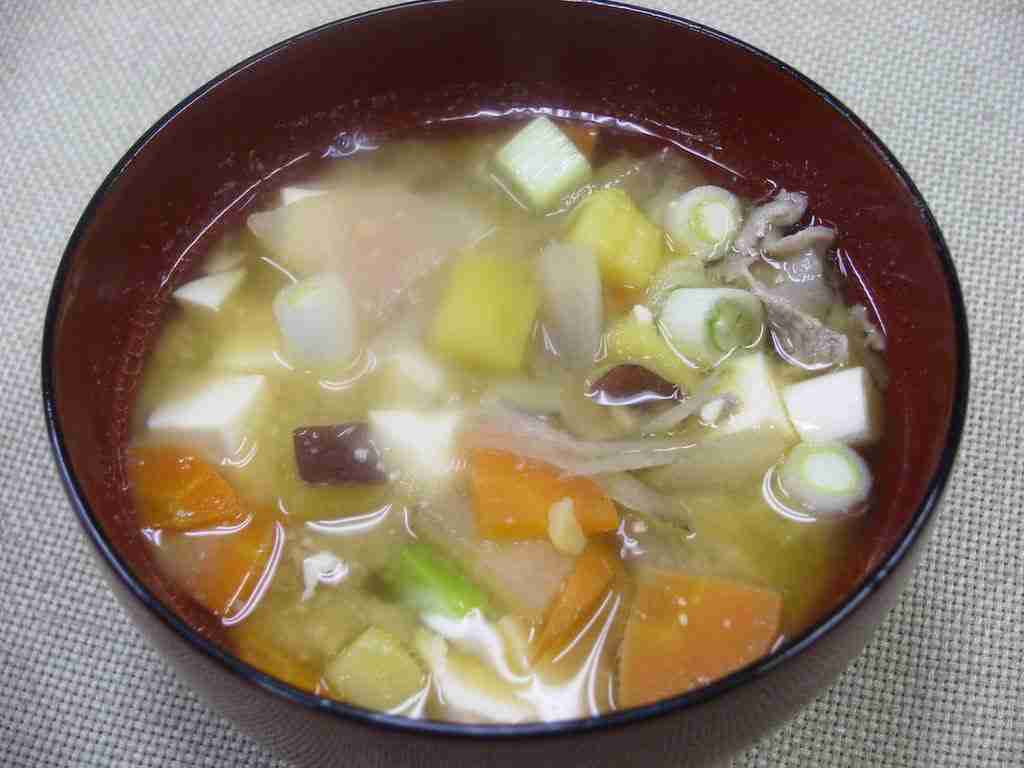
Mixed Vegetable Miso Soup Recipe


This simple, adaptable recipe is the miso soup version of stew, great for any time of year. Don't think of this as a specific recipe that must be rigidly adhered to, think of it more as a guideline that can be used with available ingredients. At my house, mixed vegetable miso soup becomes whatever we happen to have in the fridge. Please note the list of optional ingredients, sometimes meat like pork or chicken is added.

Serves 4    215 cal./serving


Ingredients:
  • 4 dried shitake mushrooms
  • 2 inches (5 cm) daikon(Japanese white radish)
  • 1 block tofu
  • 4 inches(10 cm) carrot
  • 1 potato
  • 4-5 cups dashi (bonito) stock
  • 2 Tbsp. vegetable oil
  • 4-5 Tbsp. miso
  • finely chopped green onion(naganegi) tops
Optional Ingredients
  • burdock root(gobo)
  • sweet potatos
  • field yams(sato-imo)
  • konnyaku
  • fried tofu sheets(abura-age)
  • button mushrooms(shimeji)
  • ginger
  • onion
  • chinese cabbage
  • pork
  • chicken
Directions:
  1. Soak mushrooms in warm water for about 1 hour until soft. Discard stems and cut caps into quarters.
  2. Peel daikon and carrot and cut into small chunks.
  3. Peel and cut potato into small cubes and rinse in a bowl of cold water, drain.
  4. Cut tofu block into small cubes.
  5. Add carrot and daikon to a frying pan with a little oil. Stir fry for about 30 seconds and add potatos and mushrooms, cook again for 30 seconds, and last add tofu for the last 30 seconds.
  6. Add dashi stock to pan and quickly bring to a boil, then reduce to simmer for about 10-15 minutes until vegetables are tender. Skim off any foam.
  7. Remove 1/2 cup of soup and stir in miso until it dissolves, then return to pan. Stir lightly and remove from heat. 
  8. Serve in individual bowls and garnish with freshly chopped green onions.

Friday, September 6, 2013

Japanese Braised Carrot and Burdock Root (Kinpira-gobo) Recipe


Kinpira gobo (きんぴらごぼう) is a typical Japanese side dish one often sees served at the table or in bento lunch boxes. The main ingredient, burdock root is a long skinny root vegetable growing over 3 feet long and less than an inch around. It's a good source of dietary fiber. It's crisp and has a mild, sweet, and slightly pungent taste. The crunchy burdock and carrot compliment one another nicely and is slightly sweet. It's often serves with cut red pepper rounds, but is serving children you can skip this step.

Burdock is also used as a folk remedy. It's a diuretic and is said to cleanse the blood. Eating gobo seeds is recommended by doctors to help women lactate. Recently drinking burdock tea has become popular. After peeling, dry the root skins in the sun and steep them in hot water. The tea is said to have anti-aging effects and creates beautiful skin.

Serves 4

Ingredients:
  • 1 burdock root
  • 1/2 carrot
  • 1 red pepper (optional)
  • 2 Tbsp. seasame oil
  • 4 Tbsp. soy sauce
  • 2 Tbsp. sugar
  • 2  Tbsp. mirin(sweet cooking sake)
  • white sesame seeds
Directions:
  1. Peel the burdock root with a peeler or the back of a kitchen knife. Cut into julienne strips about 2 inches(5cm) long.
  2. Immediately blanch the gobo strips in a bowl of water with a dash of vinegar.
  3. Peel and cut the carrot into strips the same size as the gobo.
  4. Heat some sesame oil in a pan and fry the carrots and gobo lightly.
  5. When softened, add the mirin, soy sauce, and sugar. Turn down the heat and cook slowly.
  6. Serve in a small dish and garnish with circles of diced red pepper (if desired) and sprinkle white sesame over the top.
Related Posts Plugin for WordPress, Blogger...